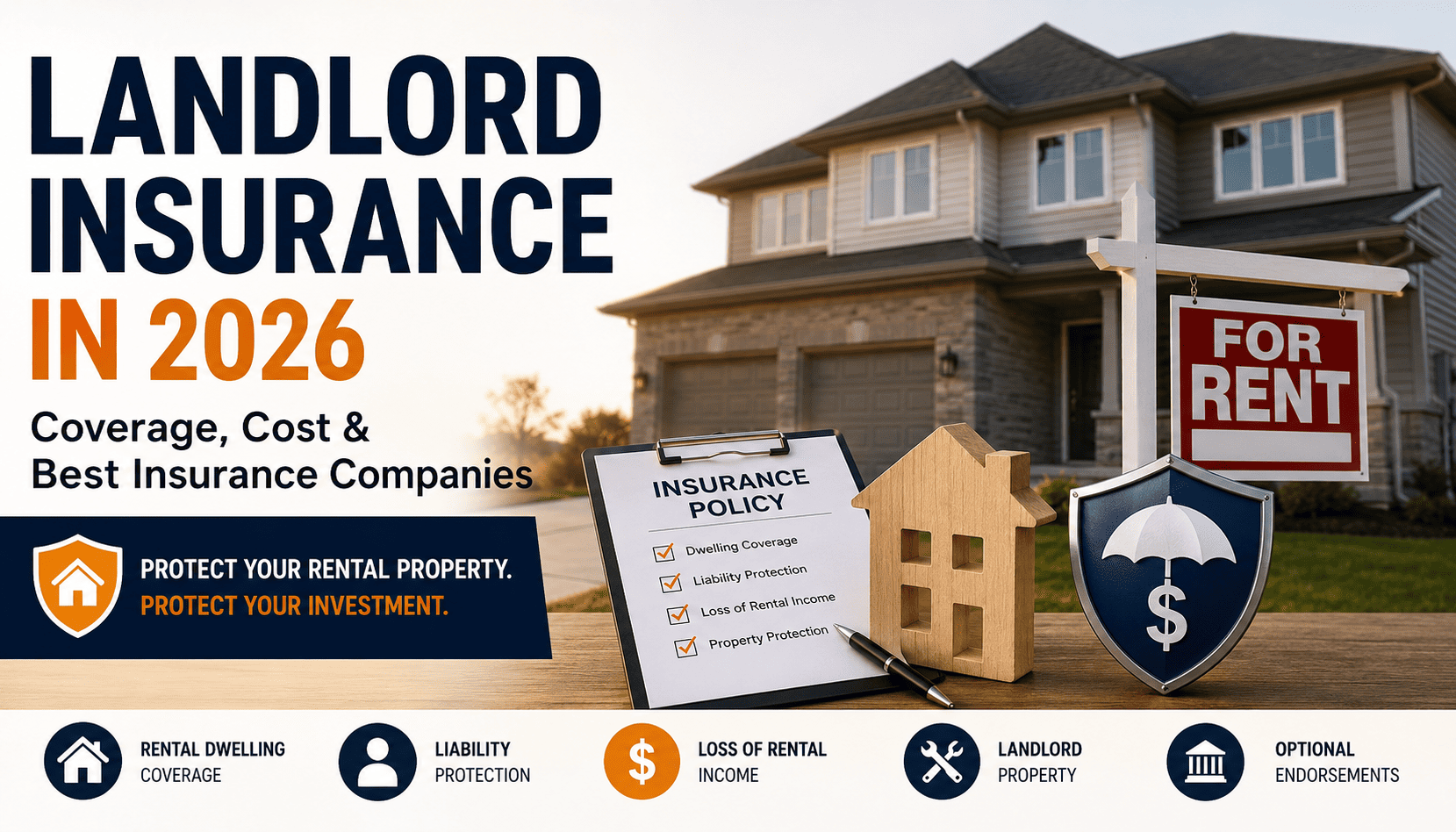
Landlord Insurance in 2026: Coverage, Cost & Best Insurance Companies
Landlord insurance is a specialized type of property insurance designed for homeowners who rent out residential properties. Whether you own a single-family rental home, a condominium, a duplex, or multiple investment properties, landlord insurance can help protect your rental property, certain landlord-owned belongings, liability exposure, and, in many cases, loss of rental income following covered events. Unlike a standard homeowners insurance policy, landlord insurance is intended for properties that generate rental income rather than serving as the owner’s primary residence.
In this complete 2026 guide, you’ll learn how landlord insurance works, what it typically covers, what factors influence insurance premiums, how to compare leading insurance companies, and practical strategies for selecting the right policy for your rental property. You’ll also discover ways to compare quotes and better protect your long-term real estate investment.
🏠 Protect Rental Property
Learn how landlord insurance may help protect rental homes, condominiums, duplexes, and other residential investment properties after covered losses.
💰 Compare Insurance Quotes
Compare landlord insurance companies, coverage options, deductibles, endorsements, and pricing before purchasing a policy.
⚖ Liability Protection
Understand how landlord liability insurance may help with covered legal expenses and claims involving injuries or property damage.
📈 Protect Rental Income
Discover how certain landlord insurance policies may include coverage for lost rental income following qualifying covered property damage.
If you rent your property to tenants, a standard homeowners insurance policy may not provide appropriate protection for rental activities. Review your current policy carefully and compare specialized landlord insurance options to help ensure your investment property is properly protected.
What Is Landlord Insurance?
Landlord insurance is a type of property insurance designed specifically for residential rental properties. Unlike standard homeowners insurance, which is intended for owner-occupied homes, landlord insurance is designed to help protect property owners who rent their homes, apartments, condominiums, duplexes, or other residential units to tenants. Coverage varies by insurer, policy type, endorsements, and applicable policy terms.
Whether you own one rental property or manage multiple investment properties, landlord insurance can become an important part of your overall risk management strategy. It may help protect the building itself, certain landlord-owned property, liability exposure, and, depending on the policy, lost rental income following certain covered events.
🏠 Rental Dwelling Protection
Many landlord insurance policies help protect the rental property’s structure, including walls, roof, attached garages, and permanently installed systems after covered losses.
🪑 Landlord-Owned Property
Items owned by the landlord, such as appliances, maintenance equipment, or furnished rental contents, may qualify for protection under certain policies.
⚖ Landlord Liability Coverage
Liability protection may help with eligible legal expenses or damages if the property owner is found legally responsible for covered injuries or property damage.
💵 Loss of Rental Income
Some landlord insurance policies include coverage that may help replace lost rental income when a covered event temporarily makes the property uninhabitable.
🏢 Investment Property Protection
Landlord insurance is commonly used for single-family rentals, duplexes, triplexes, condominiums, and other income-producing residential properties.
🛡 Long-Term Financial Security
Appropriate insurance coverage can help rental property owners manage unexpected financial risks while protecting long-term real estate investments.
Landlord insurance generally does not replace a tenant’s renters insurance policy. Many landlords encourage or require tenants to purchase renters insurance to help protect the tenant’s personal belongings and personal liability.
What Does Landlord Insurance Typically Cover?
A landlord insurance policy is designed to protect residential rental property owners against a variety of covered risks. While coverage differs by insurer, policy form, endorsements, and local regulations, many policies combine property protection, liability coverage, and optional financial protections into one insurance package.
Understanding the main categories of landlord insurance coverage makes it easier to compare policies, request accurate insurance quotes, and choose protection that matches your rental property’s needs.
🏠 Rental Dwelling Coverage
The rental property’s structure—including walls, roof, attached garage, foundation, and permanently installed systems—may be covered against eligible causes of loss, subject to policy terms and limits.
🏚 Other Structures
Detached garages, storage sheds, fences, and certain other structures located on the rental property may receive coverage if included in the policy.
🪑 Landlord Personal Property
Appliances, maintenance equipment, lawn equipment, and furnishings provided by the landlord for tenant use may qualify for protection under covered events.
⚖ Personal Liability Protection
Liability coverage may help pay eligible legal defense costs, settlements, or judgments if the landlord is legally responsible for covered bodily injury or property damage.
💵 Loss of Rental Income
Many landlord insurance policies include loss of rental income coverage when a covered loss temporarily prevents tenants from occupying the property during repairs.
➕ Optional Endorsements
Depending on the insurer, optional endorsements may provide additional protection for equipment breakdown, vandalism, ordinance or law coverage, or other qualifying risks.
Standard landlord insurance policies do not automatically cover every type of loss. Floods, earthquakes, normal wear and tear, tenant belongings, pest damage, and certain intentional acts are commonly excluded or require separate insurance or endorsements. Always review your policy documents carefully before purchasing coverage.
Best Landlord Insurance Companies in 2026
Choosing the right landlord insurance provider involves comparing more than just the annual premium. Rental property owners should evaluate coverage options, liability protection, claims service, deductible choices, optional endorsements, financial strength, and customer support. The companies below are among the well-known providers that offer landlord insurance in many parts of the United States.
| Insurance Company | Often Considered For | Online Quotes | Coverage Flexibility | Overall Value |
|---|---|---|---|---|
| State Farm | Comprehensive rental property coverage and bundling options | Excellent | Excellent | |
| Allstate | Landlord liability coverage and customizable policies | Excellent | Very Good | |
| Farmers | Flexible rental dwelling insurance options | Very Good | Excellent | |
| Liberty Mutual | Investment property insurance and digital account tools | Very Good | Very Good | |
| Travelers | Customizable landlord insurance coverage | Very Good | Excellent | |
| USAA* | Eligible military members and qualifying families | Excellent | Excellent |
Every insurance company uses different underwriting guidelines, pricing models, and optional endorsements. Requesting multiple landlord insurance quotes using the same property details, deductible, and coverage limits allows for a more accurate comparison of available policies.
When comparing landlord insurance providers, review dwelling coverage, liability limits, loss of rental income protection, deductible options, optional endorsements, claims support, financial strength ratings, and available multi-policy discounts—not just the premium.
*USAA insurance products are generally available only to eligible military members, veterans, and qualifying family members.
What Affects the Cost of Landlord Insurance?
Landlord insurance premiums are calculated using a variety of property, location, and risk-related factors. Every insurance company has its own underwriting guidelines, but many providers evaluate similar information when preparing a personalized insurance quote. Understanding these factors can help property owners compare policies more effectively.
📍 Property Location
The property’s location, local weather risks, crime rates, wildfire exposure, and proximity to emergency services may influence insurance pricing.
🏠 Property Value & Rebuilding Cost
The estimated cost to repair or rebuild the rental property after a covered loss is one of the primary factors used when determining premiums.
🏘 Type of Rental Property
Single-family homes, duplexes, triplexes, condominiums, and multi-unit rental properties may have different insurance costs because of varying levels of risk.
📄 Coverage Limits
Selecting higher limits for dwelling protection, landlord-owned property, liability coverage, or loss of rental income generally increases the premium.
📊 Claims History
Previous insurance claims involving the property or, in some cases, the policyholder may affect underwriting decisions and future insurance costs.
💲 Deductible Amount
A higher deductible may lower the annual premium, while a lower deductible generally results in higher insurance costs.
To compare landlord insurance fairly, request quotes from multiple insurers using the same property details, coverage limits, endorsements, and deductible. Comparing identical coverage makes it easier to evaluate overall value instead of focusing only on the lowest premium.
How to Lower Your Landlord Insurance Premium
Reducing the cost of landlord insurance does not always mean choosing the least expensive policy. The goal is to find the right balance between affordable premiums and appropriate protection for your rental property. The following strategies may help lower insurance costs while maintaining valuable coverage.
🏠 Bundle Insurance Policies
Many insurers offer discounts when eligible customers combine landlord insurance with auto, umbrella, or other property insurance policies.
🔒 Improve Property Security
Installing monitored alarm systems, smoke detectors, security cameras, deadbolt locks, and water leak detection devices may improve your property’s risk profile.
💲Choose an Appropriate Deductible
A higher deductible may reduce annual premiums if you are financially prepared to pay more out of pocket when filing a covered claim.
🛠 Maintain the Rental Property
Regular inspections, timely repairs, roof maintenance, plumbing updates, and electrical system improvements may reduce certain property risks over time.
📄 Review Coverage Every Year
Update your insurance after renovations, property upgrades, or changes in rental use to keep coverage aligned with your investment.
📊 Compare Multiple Quotes
Request personalized landlord insurance quotes from several companies using identical coverage limits and deductibles to evaluate pricing and policy value fairly.
The cheapest landlord insurance policy is not necessarily the best value. Compare dwelling coverage, liability limits, optional endorsements, loss of rental income protection, customer service, claims handling, and financial strength before making your decision.
Common Landlord Insurance Mistakes to Avoid
Landlord insurance offers the greatest value when your policy accurately reflects your rental property’s risks and coverage needs. Avoiding these common mistakes can help reduce unexpected coverage gaps and improve your financial protection after a covered loss.
🏠 Keeping a Homeowners Policy on a Rental Property
Once a property is rented to tenants, a standard homeowners insurance policy may no longer provide appropriate protection. Review your insurance whenever the property’s use changes.
💵 Choosing Coverage Based Only on Price
The lowest premium may also provide lower coverage limits, higher deductibles, or fewer endorsements. Compare overall protection instead of focusing solely on cost.
📋 Ignoring Liability Coverage
Liability claims involving tenant or visitor injuries can be expensive. Carrying appropriate liability limits may help reduce financial exposure after covered incidents.
💰 Overlooking Loss of Rental Income Protection
If a covered loss makes the property temporarily uninhabitable, loss of rental income coverage may help replace eligible rental income during repairs, depending on the policy.
🛠 Failing to Maintain the Property
Routine inspections and timely maintenance can reduce property risks and may also support smoother claims handling after covered losses.
📅 Not Reviewing the Policy Annually
Property improvements, rising rebuilding costs, and changing rental arrangements may require updated coverage limits and endorsements.
Review your landlord insurance every year and after major renovations, tenant changes, or property upgrades. Keeping your policy current can help ensure your rental property remains appropriately protected as your investment evolves.
Frequently Asked Questions
Below are answers to some of the most common questions property owners ask when comparing landlord insurance policies and rental property insurance providers.
What is landlord insurance?
Is landlord insurance required?
What does landlord insurance usually cover?
Does landlord insurance cover tenant damage?
How is landlord insurance priced?
How can I reduce my landlord insurance premium?
Should landlords require tenants to have renters insurance?
Should I compare multiple landlord insurance quotes?
Final Thoughts
Landlord insurance can be an important financial safeguard for rental property owners. Whether you own a single rental home or a growing portfolio of investment properties, the right policy may help protect your building, landlord-owned property, liability exposure, and rental income after covered losses. Choosing insurance that matches your property’s specific risks is an essential part of long-term property management.
Before purchasing a landlord insurance policy, compare quotes from multiple insurance providers, review coverage limits, deductibles, exclusions, endorsements, and claims support. Selecting coverage based on overall protection rather than premium alone can help reduce unexpected financial risks and provide greater peace of mind.
🏘 Protect Your Investment
Review your rental property’s rebuilding cost, liability exposure, and insurance needs regularly to maintain appropriate protection.
💰 Compare Multiple Quotes
Request personalized landlord insurance quotes using the same coverage limits and deductible to compare providers fairly.
📅 Review Your Policy Annually
Update your landlord insurance whenever you renovate your property, change tenants, purchase additional rental properties, or make significant improvements.