Cyber Liability Insurance for Small Businesses in 2026: Coverage, Cost & Best Providers

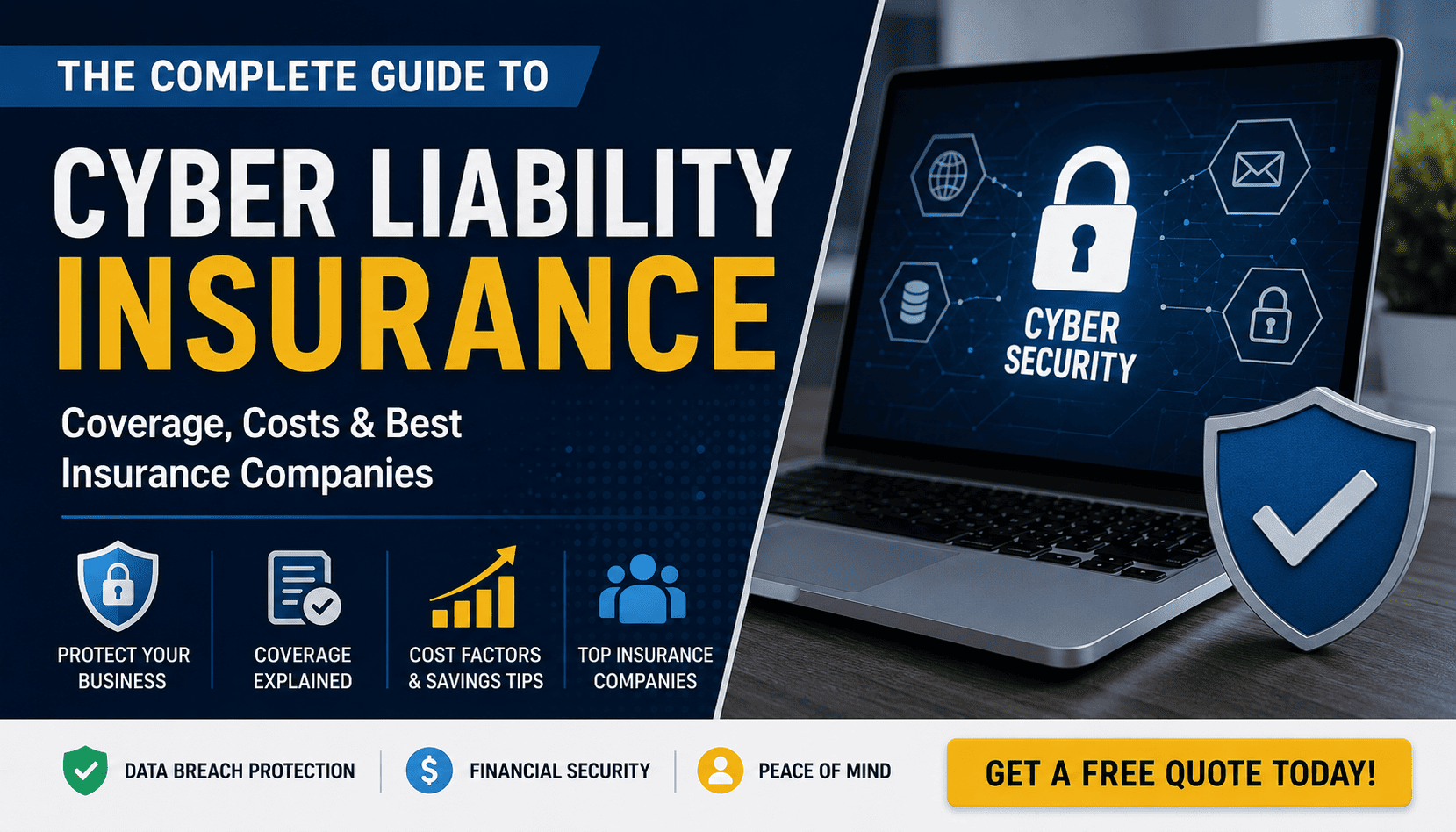
Cyber Liability Insurance for Small Businesses in 2026: Coverage, Cost & Best Providers
Cyber threats continue to evolve, and businesses of every size face growing risks from data breaches, ransomware attacks, phishing scams, and other digital security incidents. Even a single cyber event can disrupt operations, expose sensitive customer information, and create unexpected financial challenges. For many organizations, cyber liability insurance has become an important part of a broader business risk management strategy.
In this guide, you’ll learn how cyber liability insurance works, what it commonly covers, which businesses may benefit from this type of protection, how insurance costs are determined, and how to compare leading providers before requesting a personalized quote.
🛡 Understand Cyber Coverage
Learn what cyber liability insurance typically includes and how it may help businesses respond to covered cyber incidents.
💰 Compare Cyber Insurance Quotes
Evaluate multiple providers to compare coverage options, policy features, deductibles, and pricing.
🔒 Protect Business Data
Discover how businesses manage financial risks associated with data breaches, ransomware, and cybercrime.
📊 Reduce Financial Risk
Understand the factors that influence cyber insurance premiums and practical ways to strengthen your overall risk profile.
Cyber liability insurance complements—rather than replaces—strong cybersecurity practices. Many insurers consider factors such as multi-factor authentication (MFA), employee security training, data backup procedures, and incident response planning when evaluating insurance applications and preparing personalized quotes.
What Is Cyber Liability Insurance?
Cyber liability insurance is a type of business insurance designed to help organizations manage certain financial risks associated with covered cyber incidents. Depending on the policy, it may help businesses respond to events such as data breaches, ransomware attacks, phishing scams, network security incidents, and other technology-related risks.
As more businesses rely on cloud services, online payments, customer databases, and remote work, cyber risk has become an important consideration for companies of all sizes. Many organizations now evaluate cyber insurance alongside other essential business coverages as part of their overall risk management strategy.
💻 Small Businesses
Small businesses often store customer information, payment details, and employee records that may become targets for cybercrime.
🛒 E-Commerce Companies
Online retailers commonly evaluate cyber insurance because digital transactions and customer accounts create additional security considerations.
🏥 Professional Services
Law firms, healthcare providers, accountants, consultants, and technology companies frequently manage confidential client information.
☁ Cloud-Based Businesses
Organizations using cloud platforms, SaaS applications, and remote collaboration tools often include cyber risk in their insurance planning.
📱 Technology Companies
Software developers, IT providers, and digital agencies may evaluate specialized cyber coverage based on their operations.
🛡 Business Risk Management
Cyber liability insurance works alongside cybersecurity practices such as employee training, backups, endpoint protection, and multi-factor authentication.
Cyber insurance supports financial risk management but does not replace strong cybersecurity controls. Many insurers encourage businesses to maintain secure passwords, multi-factor authentication, regular software updates, encrypted backups, and employee awareness training.
What Does Cyber Liability Insurance Typically Cover?
Cyber liability insurance policies differ by insurer, but many are designed to help businesses respond to specific cyber-related incidents. Coverage may include financial assistance for certain recovery costs, legal expenses, customer notification obligations, and operational disruptions following covered events.
Reviewing policy terms carefully is important because coverage limits, exclusions, waiting periods, and optional endorsements can vary significantly between insurance providers.
💻 Data Breach Response
Many policies may help cover certain costs associated with investigating covered data breaches and responding to affected customers.
🔒 Ransomware Incidents
Some cyber insurance policies include coverage related to eligible ransomware events, subject to policy conditions and insurer requirements.
📢 Customer Notification Costs
Businesses may need to notify affected customers after certain data security incidents. Some policies help with eligible notification expenses.
⚖️ Legal Defense & Liability
Cyber policies may include legal defense costs and liability protection for covered third-party cyber-related claims.
📉 Business Interruption
Certain policies may help with eligible income loss and extra operating expenses when covered cyber incidents disrupt business operations.
🛠️ Digital Recovery Services
Some insurers provide access to incident response specialists, forensic investigators, legal advisors, or public relations support following covered cyber events.
Cyber liability insurance is not a substitute for strong cybersecurity practices. Businesses should continue to implement multi-factor authentication, secure backups, software updates, employee security training, endpoint protection, and incident response planning to reduce cyber risk.
Best Cyber Liability Insurance Providers for Small Businesses
Choosing the right cyber liability insurance provider depends on your industry, the type of data your business handles, your cybersecurity practices, and the level of protection you need. Comparing multiple insurers helps you evaluate coverage options, incident response services, policy flexibility, and overall value.
| Insurance Provider | Often Considered For | Online Quote Experience | Cyber Coverage Options | Overall Value |
|---|---|---|---|---|
| Coalition | Technology-focused businesses and cyber risk management | Excellent | Excellent | |
| Chubb | Comprehensive cyber insurance solutions | Very Good | Excellent | |
| Travelers | Small and mid-sized businesses across many industries | Very Good | Very Good | |
| Hiscox | Professional services, consultants, and startups | Excellent | Very Good | |
| The Hartford | Businesses seeking bundled insurance solutions | Very Good | Very Good | |
| Nationwide | Growing businesses looking for flexible coverage | Good | Very Good |
Cyber insurance policies vary in terms of coverage limits, exclusions, waiting periods, deductibles, incident response services, and optional endorsements. Comparing personalized quotes using the same business information can help you evaluate which provider offers the most appropriate protection for your organization.
When requesting cyber insurance quotes, provide consistent information about your business size, industry, annual revenue, cybersecurity controls, previous claims, and desired coverage limits. This helps ensure a fair comparison between different insurance providers.
What Affects the Cost of Cyber Liability Insurance?
Cyber insurance premiums are calculated using a variety of business and cybersecurity factors. Every insurer has its own underwriting process, so similar businesses may receive different quotes based on their risk profile, security practices, and selected coverage options.
🏢 Business Size
The number of employees, annual revenue, and overall scale of your business may influence your insurance premium.
💳 Sensitive Data
Businesses that store customer payment information, medical records, or other sensitive data may require broader cyber coverage.
🔐 Security Controls
Insurers often evaluate cybersecurity measures such as multi-factor authentication, endpoint protection, encryption, backups, and employee awareness training.
📊 Claims History
Previous cyber incidents or insurance claims may affect future underwriting decisions and premium calculations.
🛡 Coverage Limits
Higher policy limits, lower deductibles, and additional endorsements generally increase the overall premium.
🌍 Industry Risk
Businesses operating in healthcare, finance, technology, legal services, or e-commerce often face different cyber risk profiles than other industries.
Many insurers reward businesses that demonstrate strong cybersecurity practices. Implementing multi-factor authentication, maintaining offline backups, updating software regularly, and training employees on phishing awareness may improve your organization’s overall risk profile when requesting cyber insurance quotes.
How to Lower Your Cyber Liability Insurance Costs
Cyber insurance premiums are influenced not only by your business size and industry but also by your organization’s cybersecurity practices. Strengthening your security posture and comparing multiple insurers may help you qualify for more competitive pricing while maintaining appropriate protection.
🔐 Enable Multi-Factor Authentication (MFA)
Many insurers view multi-factor authentication as a key security control because it helps reduce unauthorized access to business systems.
💾 Maintain Secure Backups
Regularly testing offline or protected backups can improve business resilience and may strengthen your overall cyber risk profile.
👨💻 Train Employees
Employee awareness training on phishing, password security, and social engineering helps reduce the likelihood of common cyber incidents.
🔄 Keep Software Updated
Applying security updates and patches promptly helps reduce vulnerabilities that attackers may attempt to exploit.
📊 Compare Multiple Providers
Request personalized cyber insurance quotes from several insurers using identical business information and coverage limits.
📝 Review Your Policy Annually
As your business grows or adopts new technologies, review your cyber insurance to ensure your coverage continues to match your operational risks.
The best cyber insurance policy isn’t always the one with the lowest premium. Compare incident response services, legal support, data breach assistance, coverage limits, exclusions, deductibles, and policy flexibility alongside price to determine the overall value for your business.
Common Cyber Liability Insurance Mistakes Businesses Should Avoid
Cyber liability insurance is most effective when it matches your organization’s actual technology environment and risk exposure. Reviewing policy details carefully before purchasing can help reduce coverage gaps and improve your overall cyber risk management strategy.
💲Choosing a Policy Based Only on Price
The least expensive policy may offer lower coverage limits, higher deductibles, or fewer incident response services than your business needs.
📄Ignoring Policy Exclusions
Cyber insurance policies differ significantly. Review exclusions, waiting periods, and conditions carefully before making a decision.
🔓Weak Cybersecurity Controls
Some insurers expect businesses to maintain reasonable cybersecurity measures such as MFA, backups, endpoint protection, and software updates.
📈Not Updating Coverage
As your company adopts new software, cloud platforms, or stores additional customer information, your insurance needs may also change.
🤝Not Comparing Multiple Quotes
Different insurers evaluate cyber risk differently. Comparing several personalized quotes helps you assess coverage, services, and overall value.
🛡Assuming Cyber Insurance Prevents Attacks
Cyber insurance supports financial recovery after covered incidents but does not replace proactive cybersecurity practices or ongoing risk management.
The strongest cyber risk strategy combines cyber liability insurance with preventive security measures, employee awareness training, regular system updates, secure backups, and a documented incident response plan. Together, these measures help businesses prepare for and recover from cyber incidents more effectively.
Frequently Asked Questions
Below are answers to some of the most common questions businesses ask when comparing cyber liability insurance policies.
What is cyber liability insurance?
Who should consider cyber liability insurance?
Does cyber insurance cover ransomware attacks?
How is the cost of cyber insurance determined?
Can small businesses benefit from cyber insurance?
How can I reduce my cyber insurance premium?
Does cyber insurance replace cybersecurity?
How many cyber insurance quotes should I compare?
Final Thoughts
Cyber liability insurance has become an important consideration for businesses that depend on digital systems, cloud services, online payments, or customer data. While no insurance policy can prevent cyber attacks, the right coverage may help eligible businesses manage the financial impact of covered cyber incidents and support a faster recovery.
Before selecting a policy, compare several providers, review coverage limits, exclusions, deductibles, and incident response services carefully. Combining cyber liability insurance with strong cybersecurity practices can help create a more resilient and well-prepared business.
🔍 Compare Multiple Providers
Evaluate several cyber insurance quotes using the same business information to compare pricing, coverage, and overall value.
🛡 Strengthen Cybersecurity
Implement multi-factor authentication, secure backups, software updates, and employee training alongside your insurance coverage.
📅 Review Your Coverage Regularly
Update your cyber insurance as your business grows, adopts new technologies, stores more sensitive data, or expands its digital operations.