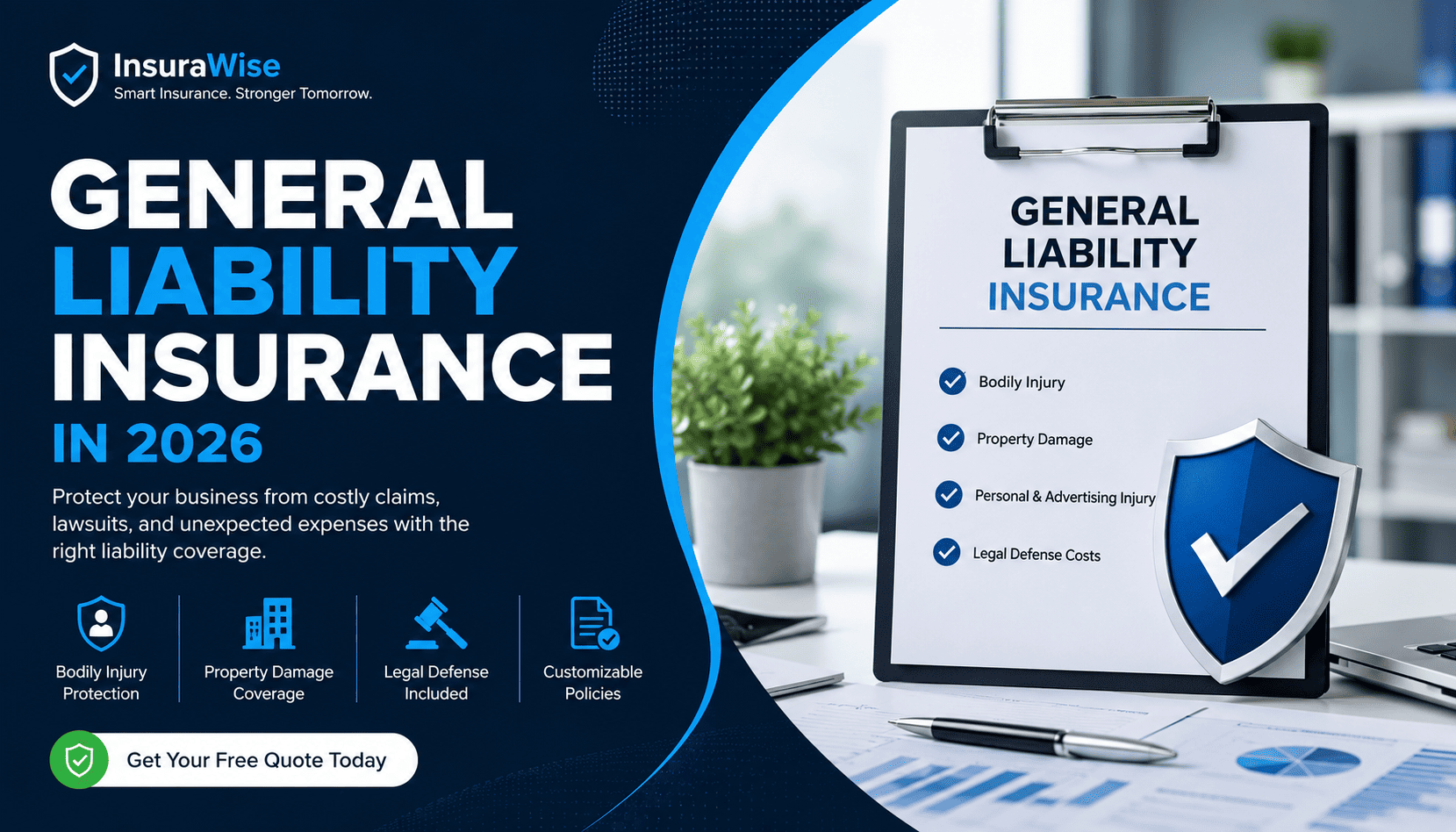

General Liability Insurance in 2026: Coverage, Cost & Best Insurance Companies
Running a business comes with opportunities—but it also comes with risks. A customer could be injured on your premises, accidental property damage could occur during a job, or your company could face an expensive lawsuit. General liability insurance is one of the most important types of business insurance because it helps protect businesses from many common third-party liability claims that could otherwise result in significant financial losses.
Whether you’re a small business owner, contractor, freelancer, retailer, restaurant owner, or growing company, understanding how general liability insurance works is essential. In this comprehensive 2026 guide, you’ll learn what general liability insurance covers, what it doesn’t cover, how much it typically costs, the factors that affect premiums, and how to compare the best insurance companies before requesting a business insurance quote.
🛡 Liability Protection
Learn how general liability insurance may help protect your business from covered third-party bodily injury and property damage claims.
⚖ Legal Defense
Understand how many policies may help cover eligible legal defense costs, settlements, and court expenses for covered claims.
💰 Protect Your Business
Discover how liability insurance may help protect your company’s finances, reputation, and long-term growth after unexpected incidents.
📊 Compare Insurance Companies
Compare coverage options, policy limits, premiums, customer service, and leading business insurance providers before purchasing coverage.
General liability insurance is often considered the foundation of a business insurance program. Many clients, landlords, and commercial contracts require businesses to carry this coverage before work begins, making it an important investment for companies of all sizes.
What Is General Liability Insurance?
General liability insurance is one of the most common types of business insurance. It is designed to help protect businesses against certain third-party claims involving bodily injury, property damage, and personal or advertising injury. Whether you operate a small business, manage a retail store, work as an independent contractor, or own a growing company, this coverage can play an important role in managing financial risk.
Unexpected accidents can happen in almost any industry. A customer may slip and fall inside your business, an employee may accidentally damage a client’s property while performing work, or your company may face a lawsuit related to advertising or reputational claims. General liability insurance helps businesses prepare for these situations by providing protection for covered claims, subject to the policy’s terms and conditions.
🛡 Third-Party Protection
General liability insurance primarily protects your business from claims made by customers, visitors, vendors, and other third parties—not your own employees.
⚖ Legal Defense Costs
Many policies help pay eligible legal defense expenses, attorney fees, settlements, or court judgments related to covered liability claims.
🏪 Suitable for Most Businesses
Retail stores, restaurants, contractors, consultants, cleaning companies, technology firms, and many other businesses commonly carry general liability insurance.
📄 Often Required by Contracts
Clients, landlords, government agencies, and commercial contracts frequently require businesses to carry general liability insurance before work begins.
💼 Business Reputation Protection
Responding quickly to covered claims may help reduce financial disruption and allow your business to continue operating with greater confidence.
📈 Foundation of Business Insurance
General liability insurance is often the starting point for a complete business insurance program and can be combined with other commercial insurance policies.
General liability insurance protects against many common third-party liability risks, but it does not cover every type of business loss. Depending on your industry, you may also need professional liability insurance, workers’ compensation insurance, commercial property insurance, cyber insurance, or commercial auto insurance.
What Does General Liability Insurance Typically Cover?
General liability insurance helps protect businesses from many common third-party liability claims that may arise during normal business operations. Although every policy has its own terms, exclusions, and coverage limits, most commercial general liability policies provide protection for several key categories of risk.
Understanding these coverage areas can help business owners compare insurance policies more effectively and select protection that matches the risks associated with their industry.
🤕 Bodily Injury Claims
If a customer, visitor, or another third party suffers a covered injury on your business premises or because of your business operations, general liability insurance may help pay eligible damages and legal expenses.
🏢 Property Damage Liability
Coverage may apply if your business accidentally causes damage to another person’s property while performing covered work or providing services.
⚖ Legal Defense Costs
Many commercial general liability policies help pay eligible attorney fees, court costs, settlements, and judgments associated with covered lawsuits.
📢 Personal & Advertising Injury
Certain policies may provide protection against covered claims involving libel, slander, copyright infringement in advertising, or other qualifying personal and advertising injuries.
🏪 Premises Liability
Businesses with offices, stores, warehouses, restaurants, or other commercial locations often rely on premises liability coverage to help manage risks involving visitors.
📄 Contract Requirements
Many commercial contracts require proof of general liability insurance before work begins, making this coverage essential for contractors, consultants, and service providers.
General liability insurance does not cover every business risk. Professional errors, employee injuries, commercial vehicles, business property damage, cyber incidents, and intentional acts generally require separate insurance policies or endorsements. Always review your policy documents carefully to understand what is and is not covered.
Best General Liability Insurance Companies in 2026
Choosing the right general liability insurance provider involves more than comparing premiums. Business owners should evaluate policy limits, claims service, financial strength, available endorsements, industry experience, and customer support before purchasing commercial liability coverage.
| Insurance Company | Best For | Online Quotes | Coverage Flexibility | Overall Value |
|---|---|---|---|---|
| Next Insurance | Small businesses and self-employed professionals | Excellent | Excellent | |
| The Hartford | Small and medium-sized businesses | Excellent | Excellent | |
| Nationwide | Comprehensive commercial insurance solutions | Very Good | Excellent | |
| Travelers | Construction, contractors, and professional services | Very Good | Excellent | |
| Chubb | Businesses seeking higher liability limits | Very Good | Excellent | |
| Hiscox | Freelancers, consultants, and small companies | Excellent | Very Good |
Every insurance company uses different underwriting guidelines and pricing models. Comparing several personalized general liability insurance quotes allows business owners to evaluate policy features, coverage options, deductibles, and overall value before selecting a provider.
When comparing general liability insurance providers, don’t focus only on price. Review coverage limits, legal defense protection, policy exclusions, customer reviews, claims handling, financial strength ratings, optional endorsements, and industry experience to find the best fit for your business.
What Affects the Cost of General Liability Insurance?
General liability insurance premiums vary from one business to another because every company presents a different level of risk. Insurance providers evaluate several factors before issuing a commercial liability insurance quote, and understanding these factors can help business owners compare policies more effectively.
While no two businesses receive identical pricing, reviewing these key rating factors can help you better understand why premiums differ and how you may qualify for more competitive insurance quotes.
🏢 Business Industry
Your industry is one of the biggest pricing factors. Construction companies, contractors, manufacturers, and businesses with higher public exposure generally face different liability risks than office-based businesses.
👥 Number of Employees
Businesses with more employees often have greater day-to-day operations and increased exposure to potential liability claims, which may influence insurance premiums.
📍 Business Location
Where your business operates can affect insurance costs. Local regulations, lawsuit trends, customer traffic, and regional risks may all influence premium calculations.
💵 Coverage Limits
Selecting higher liability limits generally increases the premium because the insurer may be responsible for larger covered claims.
📋 Claims History
Previous liability claims may affect future underwriting decisions. Businesses with fewer historical claims may qualify for more favorable pricing depending on the insurer.
📄 Deductible & Policy Options
Deductible selections, optional endorsements, and additional insured requirements can all influence the total cost of a general liability insurance policy.
Compare multiple general liability insurance quotes using the same coverage limits, deductibles, and business information. This makes it easier to evaluate pricing differences and identify the policy that offers the best overall protection for your business.
How to Lower Your General Liability Insurance Premium
Keeping business insurance affordable doesn’t necessarily mean choosing the lowest-priced policy. The best approach is to reduce unnecessary risks while maintaining appropriate protection for your business. Many insurers reward businesses that demonstrate responsible operations and effective risk management.
📑 Compare Multiple Insurance Quotes
Request personalized quotes from several commercial insurance providers using identical coverage limits and business information. Comparing multiple offers helps identify the best combination of price, coverage, and customer service.
🛡 Improve Workplace Safety
Implementing employee safety training, regular inspections, and documented safety procedures may help reduce workplace risks and improve your insurance profile.
📋 Choose Appropriate Coverage Limits
Select liability limits that match your business operations and contractual requirements. Avoid paying for unnecessary coverage while ensuring adequate protection for common business risks.
📦 Bundle Business Insurance Policies
Many insurers offer discounts when general liability insurance is combined with commercial property insurance or packaged as part of a Business Owner’s Policy (BOP).
📉 Maintain a Clean Claims History
Reducing avoidable claims through proactive risk management may help improve eligibility for competitive insurance pricing over time.
🔄 Review Your Policy Every Year
As your business grows, your insurance needs may change. Review your policy annually to ensure your coverage remains appropriate and cost-effective.
Price is important, but it shouldn’t be the only factor when selecting general liability insurance. Compare policy exclusions, legal defense coverage, claims service, financial strength, optional endorsements, and customer satisfaction to find the best long-term value for your business.
Common General Liability Insurance Mistakes to Avoid
General liability insurance is one of the most important investments a business can make, but purchasing the wrong policy—or misunderstanding what it covers—can leave your company exposed to costly financial risks. Avoiding these common mistakes can help you choose more effective protection.
❌ Choosing Coverage Based Only on Price
A lower premium may come with lower liability limits, more exclusions, or fewer policy features. Compare overall value rather than focusing only on cost.
📄 Ignoring Policy Exclusions
Every policy has exclusions. Read your insurance documents carefully so you understand which claims, activities, and business operations may not be covered.
🏢 Buying Insufficient Liability Limits
Businesses with significant customer traffic, valuable contracts, or higher operational risks may require higher liability limits than the minimum available.
🔄 Never Reviewing Your Policy
As your company grows, hires employees, adds locations, or expands services, your insurance needs may change. Review your policy annually.
🚚 Assuming It Covers Every Business Risk
General liability insurance does not replace commercial auto insurance, workers’ compensation insurance, cyber insurance, professional liability insurance, or commercial property insurance.
📑 Failing to Compare Multiple Quotes
Different insurers evaluate business risks differently. Comparing multiple personalized quotes can help you identify better coverage and competitive pricing.
General liability insurance should be part of a broader business insurance strategy. Depending on your industry, combining it with professional liability, workers’ compensation, commercial property, cyber, and commercial auto insurance can provide more comprehensive protection for your business.
Frequently Asked Questions
Here are answers to some of the most common questions business owners ask before purchasing general liability insurance.
What is general liability insurance?
Who needs general liability insurance?
Does general liability insurance cover employee injuries?
Does general liability insurance cover professional mistakes?
How much general liability insurance does a small business need?
Can I bundle general liability insurance with other business insurance?
How can I lower my general liability insurance premium?
Should I compare multiple general liability insurance quotes?
Final Thoughts
General liability insurance is one of the most important investments a business can make. Whether you operate a small startup, manage a growing company, or work as an independent contractor, the right policy can help protect your business against unexpected third-party liability claims, legal expenses, and costly financial losses.
Before purchasing coverage, compare quotes from multiple insurance providers, carefully review policy exclusions, liability limits, deductibles, and optional endorsements. The best general liability insurance policy is one that provides protection tailored to your business operations—not simply the lowest premium.
🛡 Protect Your Business
General liability insurance helps businesses manage covered third-party bodily injury, property damage, and legal liability claims.
💰 Compare Multiple Quotes
Review personalized quotes from several insurers to compare premiums, coverage options, customer service, and policy value before making a decision.
📅 Review Coverage Annually
As your business grows, expands services, hires employees, or signs larger contracts, review your insurance regularly to ensure your protection keeps pace.